
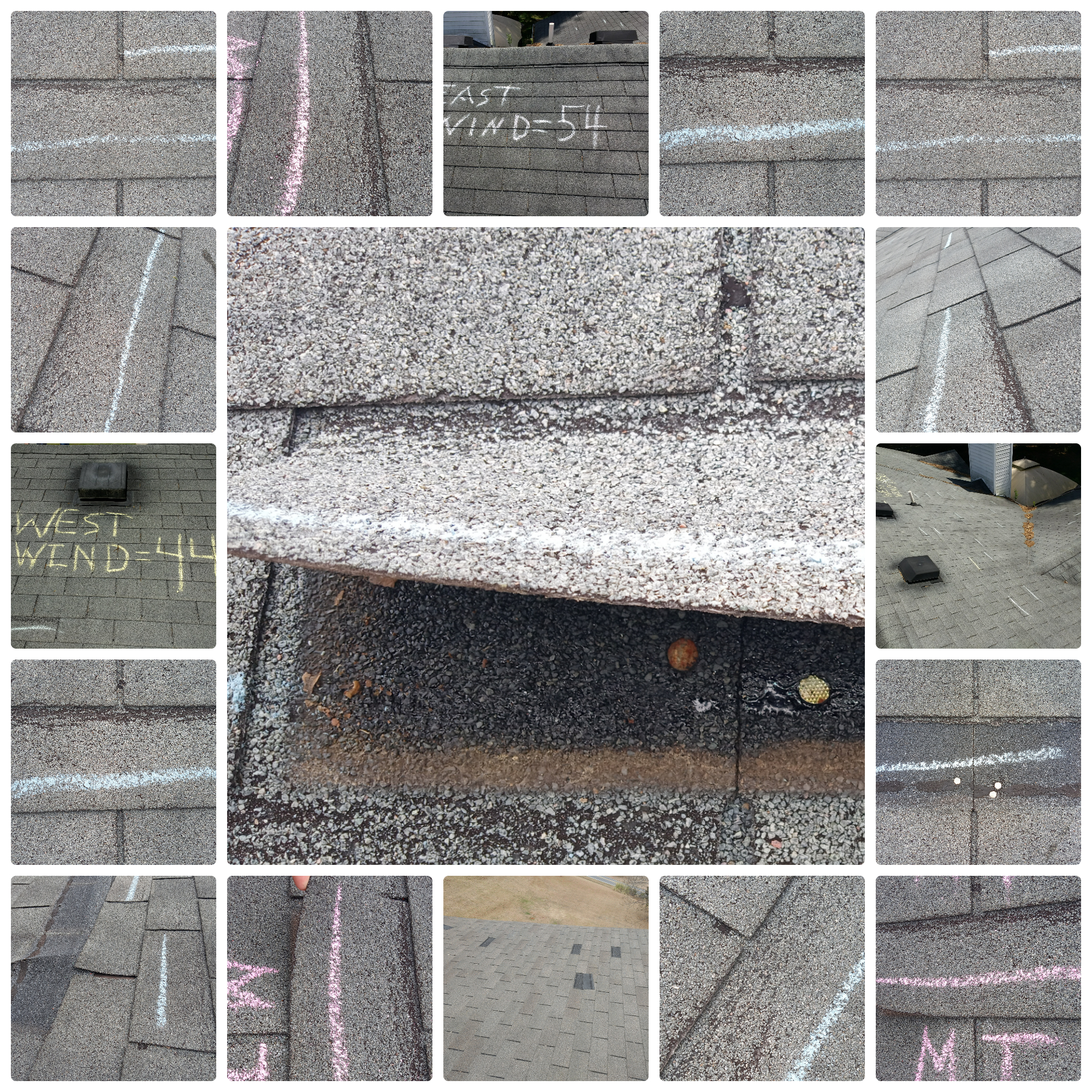
Wind Damage:
Any damage to your roof can lead to big issues. Wind damage can be caused by gusts of wind in a storm. Each type of shingle has a wind rating. The 3-tab, which is the cheapest investment, has the lowest resistance to wind. One of our mentors once told us that a 10 year old roof can get a gust of wind of 20 mph and it will damage or rip a tab off of the roof. Though that may have been the case, normally a 60- 70mph wind will cause the damage to a 3-tab. The more intense the wind, and the older the roof, the more you can be certain that you need to have it inspected. The thicker the shingle, the more durable the shingle becomes to wind. The thickness of your shingle can range. If you have a builder grade 3-tab shingle for your home, you might get a few gusts of wind before you’ll need to have it replaced. The shingle is very thin and doesn’t require much force to crease or damage the material. If your 3-tab roof has aged more than 10-15 years, it’s already time to look and verify that your topside is going to displace the rain properly. When the time does come to replacing the 3-tab material, since it is easily damaged, we do not recommend reinstalling a builders grade 3-tab.
If you do have builders grade shingles on your topside and you’re able to replace the shingles, we highly recommend that you upgrade at least to an architectural shingle. There are different grades of quality, much like the quality of paper towels, so keep that in mind when you make your selection. If you can afford to install a better shingle or tin, make sure that you have a real professional install the material properly, so that you can add the shingle manufactured warranty. We promise you, there is a right and wrong way to install every roofing material. We cannot say this enough: “If you are misfortunate to install cheap shingles, like 3-tab, it’s either because you didn’t know, or you didn’t care. If you’ve read this, you’re installing it because you don’t care.” Please, keep in mind, that as a roofing company, we love when you reinstall a 3-tab roof.
Architectural shingles are twice as thick as a 3-tab shingle. In the thickest part of the architectural shingle, it can almost reach 3 times thicker than a 3-tab shingle. This thickness makes damaging your roof with typical gusts of wind more difficult and protects your home more efficiently than the cheaper
shingle. A storm will have to blow wind gusts between 110-130mph before wind will really be an issue. To damage an architectural shingle with wind, it would have to be 20-23 years old, improperly installed, or God sent a massive storm your way.
To understand why it is so important to inspect your shingles after a windstorm you’ll need to know a little about how a shingle is made. Think of the shingle as a sandwich. The bottom side is simply a coat of asphalt underneath a layer of fiberglass, or paper, then there is another layer of asphalt. This simple sandwich is necessary for water displacement, however as you might know, asphalt does not hold up to the sun’s heat or it’s UV rays. The UV rays are stopped by the surface area being sprinkled with granuleson the shingle to protect the asphalt.
When wind picks up your topside with enough force to crease a shingle and leave a noticeable line, it thins the shingle by removing the granules. This exposes the asphalt and, in some cases, the middle part of that sandwich, the fiberglass membrane. Once the fiberglass is exposed, you will start losing your water displacement ability and start having water damage issues. The sooner you catch wind damage, the more likely you will prevent further damage to your home.
Areas Served in Georgia:
Athens | Monroe | Braselton | Jefferson | Lilburn | Madison | Watkinsville | Winder | Commerce | Covington | Pendergrass | Dawsonville
